
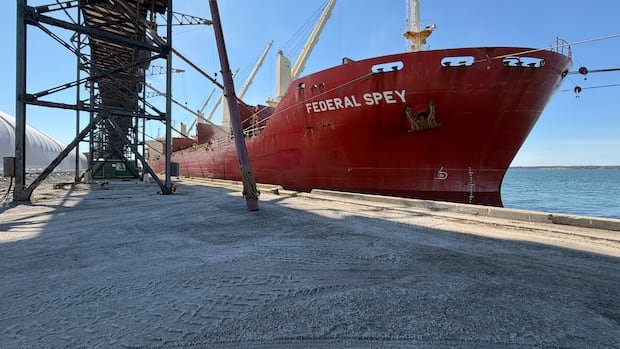

A vessel is scheduled to depart from the Port of Churchill this week, carrying the town’s first grain shipment in more than five years. Loaded with approximately 30,000 metric tonnes of Canadian wheat, the ship’s voyage to Europe marks a significant achievement that officials have been working towards for years.
During a ceremony at the port on Monday, Northern Affairs Minister and Member of Parliament for Churchill-Keewatinook Aski, Rebecca Chartrand, highlighted the importance of Churchill as a key northern gateway linking the Prairies, the Arctic, and the global market. Due to the COVID-19 pandemic, grain shipments from Churchill, Canada’s sole railway-accessible deep-water arctic port, were suspended, with the last grain shipment departing in 2020.
Arctic Gateway Group, the owner of the port and Hudson Bay Railway, announced in July its plans to resume grain shipments this summer. Recent developments suggest the possibility of extending the port’s four-month shipping season, as feasibility studies propose year-round shipping without the need for costly icebreakers due to melting sea ice.
Chartrand emphasized that investing in the port would enable Canada to access more markets amidst shifts in global trade dynamics and the evolving relationship with the United States. The consortium Arctic Gateway, comprising northern communities and First Nations, anticipates the most diverse shipping season in the port’s history, including the loading of zinc concentrate, the town’s first-ever potash shipment, and a vessel bound for Nunavut for resupply.
Arctic Gateway CEO Chris Avery reflected on the neglect the port faced for years before the consortium took over, emphasizing the importance of Canadian and Indigenous ownership in revitalizing the infrastructure. The ongoing grain shipment, in partnership with AGT Foods, is one of three scheduled departures this season, bound for the Mediterranean.
Local resident Katie de Meulles expressed the need for further studies to assess the impact of increased port activity on wildlife but found assurance in Arctic Gateway’s Indigenous ownership for environmental protection. She stressed the importance of finding a balance between economic benefits and environmental conservation for the benefit of all Canadians.