
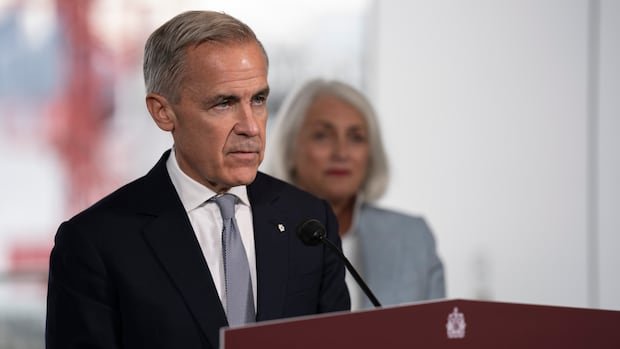

Prime Minister Mark Carney unveiled a $1.2 billion federal investment in marine conservation on Tuesday, coinciding with forthcoming decisions on a new pipeline route to the West Coast and the expansion of a key port in Metro Vancouver. Carney emphasized the potential impact of these significant projects on marine habitats, stressing the need for enhanced protection mechanisms in the face of increased maritime activity.
The allocated funds will support various initiatives, including bolstering the Canadian Coast Guard’s monitoring capabilities, implementing a national near-shore weather forecasting system, and establishing an oil spill response plan for marine mammals. Additionally, the plan entails upgrades to search and rescue facilities, enhanced seabed mapping, and strengthened efforts for fisheries conservation.
The announcement was made in North Vancouver just before an imminent deadline for Ottawa to determine the national interest status of a proposed pipeline connecting Alberta to the south coast of British Columbia. Carney highlighted the economic benefits and job creation potential of the pipeline project, emphasizing the government’s commitment to responsible development practices.
Carney assured that the proposed pipeline route would avoid sensitive areas and align with existing infrastructure, while emphasizing the continuation of the tanker ban along British Columbia’s north coast. Simultaneously, Alberta is preparing for a referendum on potential separation from Canada, underscoring the complex political landscape surrounding energy projects.
Moreover, LNG Canada confirmed its intention to proceed with a Phase 2 expansion in Kitimat, B.C., aiming to double its operational capacity. Carney has also expressed support for the expansion of the Port of Vancouver’s Roberts Bank terminal, citing the importance of diversifying export destinations and strengthening trade relationships.
As maritime activities intensify at the Port of Vancouver, Carney emphasized the government’s commitment to safeguarding marine ecosystems, particularly the endangered southern resident killer whales. Initiatives to mitigate underwater noise pollution and enhance monitoring capacities across Canada’s coasts were highlighted as critical measures to protect marine life.
The federal funding will also support Indigenous-led stewardship efforts, fisheries enforcement enhancements, and conservation initiatives in the Northern Shelf Bioregion. The investments signal a step forward in collaborative efforts to address the expected rise in vessel traffic and potential environmental impacts associated with major infrastructure projects.
While Coastal First Nations welcomed the funding as a positive step towards responsible shipping practices, the Wilderness Committee raised concerns over the adequacy of the allocated budget for ocean protection in comparison to the investment in the Roberts Bank expansion. The advocacy group cautioned against potential environmental risks and called attention to proposed legislation that could compromise species protection measures.