
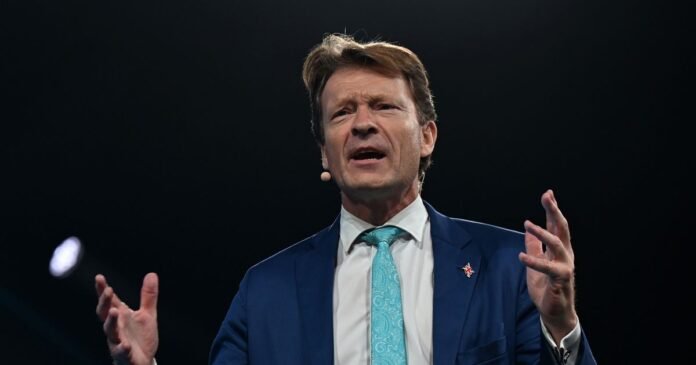

Reform UK faced criticism for lacking a clear strategy for the country, as its deputy leader announced intentions to halt new high-speed rail projects if the party gains power. Richard Tice discouraged companies from pursuing contracts for the construction of Northern Powerhouse Rail (NPR), suggesting that the party would redirect funds to more essential national priorities instead.
NPR aims to enhance railway connections from east to west across northern England, with the Labour party anticipated to express support for the project soon. In response to Tice’s remarks, a Labour spokesperson highlighted the absence of a coherent plan from Reform UK, emphasizing Labour’s commitment to investing in rail infrastructure to connect communities in the North and advance the nation’s transportation network.
Tice, in his statement preceding a report by the center-right think tank Policy Exchange, criticized the government’s focus on high-speed rail projects, suggesting a disconnect between political decisions and the genuine needs and desires of ordinary citizens. He expressed concerns over the escalating costs and delays of HS2 and warned potential bidders for projects like the Liverpool-Manchester high-speed rail and the northern extension of HS2 to reconsider, as a Reform government would prioritize directing resources to more pressing national needs.
The Policy Exchange report forecasted that NPR could potentially incur costs exceeding £30 billion, surpassing the issues faced by HS2. Meanwhile, Keir Starmer, addressing Labour MPs, emphasized the importance of fighting for improved transport infrastructure to support work opportunities and economic growth. Andy Burnham, the Mayor of Greater Manchester, criticized Reform UK’s stance on rail development, advocating for higher aspirations for the North’s transportation network.
Responding to the debate, a Department for Transport (DfT) spokesperson acknowledged the historical neglect of transport infrastructure in the North, underscoring the government’s efforts to enhance connectivity and stimulate growth through projects like the Transpennine Route Upgrade. The DfT pledged to outline its vision for Northern Powerhouse Rail in the near future, aiming to bring faster and more reliable travel options to northern communities.
Overall, the dispute surrounding high-speed rail development reflects differing perspectives on regional investment priorities and the future of transportation infrastructure in the UK.