
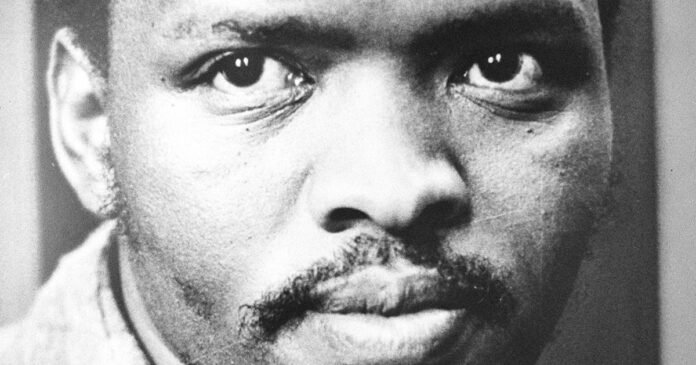

An inquiry into the passing of South African anti-apartheid hero Steve Biko was dramatically reopened exactly 48 years after his demise. Biko, inspired by the jailed iconic leader Nelson Mandela, spearheaded the fight against South Africa’s apartheid system but succumbed to severe injuries inflicted by the police. He later gained global recognition. Singer Peter Gabriel honored him with the song ‘Biko’ in 1980, and in 1987, Hollywood star Denzel Washington portrayed him in the movie Cry Freedom.
Biko’s son, Nkosinathi, expressed a desire for the full truth to be revealed rather than seeking revenge, noting that the police officers involved are now elderly. The family has long sought the reopening of the inquiry, which initially concluded no one was at fault for Biko’s death.
The inquest scheduled for today was adjourned to allow for testimony from witnesses at a later date. The Mirror had the opportunity to interview Biko’s son in 2017 and his partner, Mamphela Ramphele, in 2013, who was pregnant with his child at the time of his demise. Only two of the five policemen implicated in Biko’s death at the age of 30 are still living. The National Prosecuting Authority confirmed that if sufficient evidence emerges, these officers could face murder charges.
Regarding the case, the NPA’s Regional spokesperson emphasized the commitment to pursuing justice without time constraints. The reevaluation aims to address past atrocities and provide closure to the Biko family and society at large.
Biko died in 1977 after suffering brutal police assault, leading to a fatal brain hemorrhage during an 800-mile transfer to a Pretoria prison hospital. The initial inquest concluded no one was responsible for his demise, sparking global outrage.
Mandela, who served as South Africa’s President from 1994, hailed Biko as a pivotal figure in the black struggle for justice, remarking on the government’s role in prolonging apartheid by eliminating him.
Nkosinathi vividly recalled the day his father passed away in 1977, witnessing his mother’s emotional breakdown and harboring suspicions of police involvement in Biko’s death. Despite the officers’ refusal to admit guilt before the Truth and Reconciliation Commission, they were denied immunity from prosecution.
Justice Minister Mmamoloko Kubayi’s directive to revisit the case underlines the government’s dedication to resolving politically motivated deaths unresolved during apartheid, emphasizing accountability and justice for affected families.
The apartheid regime’s institutionalized racial discrimination led to an estimated 21,000 deaths in political violence over 42 years until its dissolution in 1990. The Mirror notably opposed apartheid, running influential editorials denouncing the system, including coverage of Steve Biko’s death.
The Mirror highlighted the controversy surrounding Biko’s demise, with Justice Minister James Kruger’s conflicting statements on the cause of death. The ongoing inquest seeks to clarify the circumstances, amid past instances of suspicious deaths involving South African Police.
The move to revisit unresolved cases of politically motivated deaths from the apartheid era reaffirms the government’s commitment to upholding the rule of law, ensuring accountability, and delivering justice to affected families.