
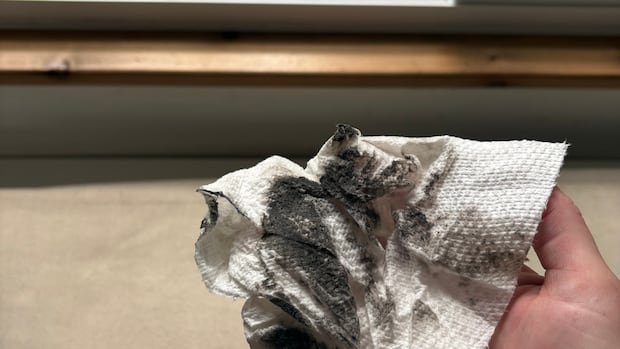

A research team based in Hamilton has unveiled insights into the issue of soot accumulation in neighborhoods near the city’s industrial zone. Residents have long voiced concerns about a dark, dirty substance coating their properties, with a recent surge in complaints in early July over what some described as the most severe fallout in recent times.
Sarah Styler, an environmental chemistry associate professor at McMaster University, along with Grace Yao, a PhD candidate in Styler’s lab, is part of a study named “What’s the Grime?” aimed at addressing the soot mystery. Through collaboration with volunteers who collected samples across the city in 2024 and 2025, the researchers discovered that the soot contains hazardous chemicals typically associated with coal combustion. Moreover, elevated levels of dust and polycyclic aromatic hydrocarbons (PAHs) were detected closer to the industrial precinct in northeast Hamilton.
Styler, in partnership with Environment Hamilton, conducted the study supported by a $15,000 grant from the university in 2024. Both Styler and Yao, residing in east Hamilton and Corktown respectively, have personal encounters with the soot issue. The research unearthed historical references to the soot dating back to the 1950s.
The study involved the distribution of sampling kits to 50 volunteers across the city to collect soot samples, which were analyzed at four-month intervals. Styler highlighted that more dust and toxic compounds were observed closer to the industrial sector, emphasizing the prevalence of toxic class substances in those areas.
The research team’s findings indicate that industrial emissions are likely the primary source of the soot affecting communities near coke plants. Although the study did not encompass all potential sources contributing to the fallout due to resource constraints, coal combustion emerged as a significant factor generating the detected PAHs.
Styler acknowledged the frustration among locals regarding the lack of official information on the issue and emphasized the necessity for continued monitoring and analysis to pinpoint specific industrial sources responsible for the PAHs. The team plans to present their results at a community meeting on Aug. 20, expand the study to involve 200 volunteers, explore additional compounds in the grime, and investigate effective cleaning methods.