
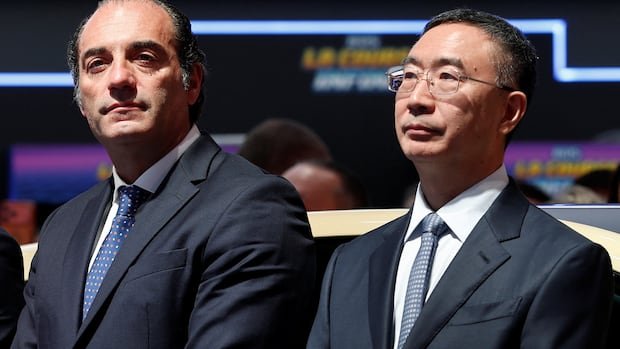

Stellantis and Volkswagen, the prominent players in Europe’s auto industry, showcased their growing faith in electric vehicles at the Paris auto show this year, drawing inspiration from the success of Chinese counterparts in the market.
Both companies are revamping their strategies to counter the increasing competition from Chinese rivals in Europe. Stellantis, comprising brands like Citroen, Peugeot, Opel, and Fiat, is leveraging partnerships with Chinese companies like Leapmotor and Dongfeng to study and adopt advanced technologies.
Stellantis CEO, Antonio Filosa, emphasized the importance of collaboration and knowledge-sharing to enhance competitiveness. The company’s recent tie-ups with Leapmotor and Dongfeng are part of a strategic shift to localize operations and comply with European manufacturing regulations.
The shift towards electric vehicles in Europe has gained momentum, driven by factors like rising fuel costs and the availability of more affordable models from Stellantis and Volkswagen. These automakers are facing tough competition from Chinese firms expanding globally to offset a decline in their domestic market.
Volkswagen’s transformation has been significantly influenced by China, which CEO Oliver Blume described as a crucial learning ground for the industry. While Volkswagen’s collaboration with Xpeng primarily focuses on the Chinese market, potential partnerships in Europe are still in the conceptual stage.
Partnering with Chinese firms in Europe could present challenges, such as aiding rivals in localizing production and meeting regulatory requirements. Despite this, collaborations with Chinese companies like Leapmotor have proven successful for Stellantis in Europe.
Industry analysts believe that European automakers must acknowledge China’s leading role in shaping the industry and embrace the opportunity to learn from their Chinese counterparts. The dynamics have shifted, with Chinese companies now serving as the educators in the global automotive landscape.