
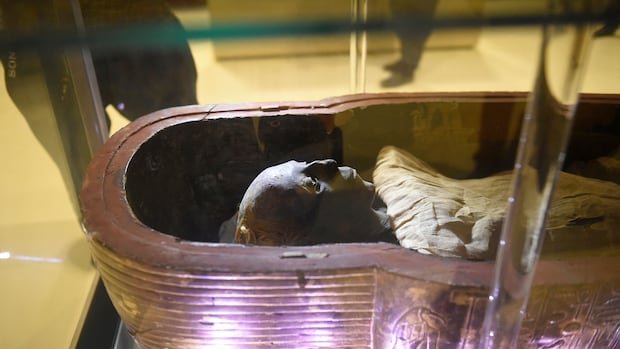

A study published in the International Journal of Cultural Property has shed light on the global online market for preserved human remains, a niche interest that researchers warn could pose health risks. Lead author Kirsty Squires and her team examined 128 online posts from 2015 to 2025 showcasing or selling mummified remains of humans and animals. The study revealed a prevalence of mummified heads, hands, and feet in these listings.
These preserved body parts can harbor dormant microorganisms like bacteria, fungi, and yeast, potentially leading to health issues if mishandled. Proper storage conditions are crucial to prevent deterioration, as seen in images online where remains showed signs of decay due to inadequate storage. Unlike in museums where mummies are kept under controlled environmental conditions, private collectors may not ensure the same level of care when storing these remains, raising concerns about the release of airborne microorganisms during handling.
Researchers caution that exposure to hidden fungal spores or bacteria from mummified human tissue, which can survive for centuries, may pose risks, especially for immunocompromised individuals. Additionally, some mummified body parts may contain toxic chemicals like arsenic and mercury from historical embalming practices.
While the study did not report specific cases of illness from handling online-sold human remains, historical incidents like the deaths of conservation scientists in 1973 and Lord Carnarvon in 1923 suggest potential health hazards associated with exposure to airborne spores. Despite these risks, some experts believe that with proper precautions, such as using protective equipment and limiting direct contact with the remains, the health concerns may be minimized.
In Canada, where 11 out of the examined posts originated, concerns persist over the unregulated trade in human remains online. The lack of meaningful regulations in the trade of human remains in Canada has raised ethical questions. While some shipping companies like Canada Post, Purolator, and UPS explicitly prohibit the shipment of human remains, sellers may exploit loopholes by mislabeling packages as archaeological samples.
The online trade of mummified human remains is a contentious issue, with calls for stricter regulations and potential bans on such transactions to prevent the commodification of human bodies. As the debate continues, experts emphasize the need for ethical considerations and stricter oversight to protect the dignity of human remains and prevent health risks associated with their trade.