
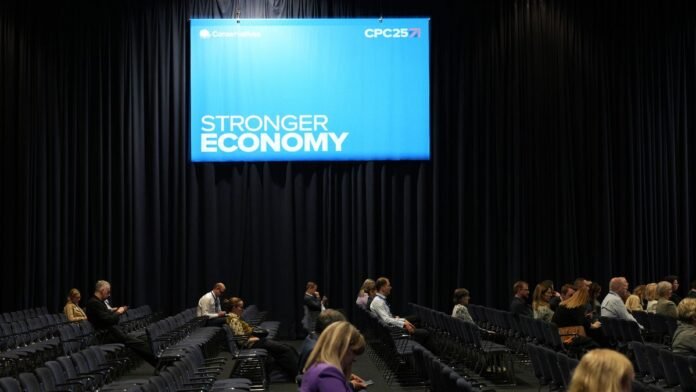

On the final evening of the Conservative conference, I strolled past a sparsely populated room where a small group of individuals was enjoying ABBA music.
Despite it being just 10:15 pm, a time usually bustling with party loyalists and corporate influencers eager to mingle with prominent Conservative figures, only a few people were dancing to “Gimme, Gimme, Gimme,” reflecting a shift in the political landscape.
Once a formidable force in politics, the Conservative Party now finds itself in a state of decline. With Labour in government, Reform gaining ground, and even the Liberal Democrats encroaching on traditional Tory territories, the party’s influence has waned.
Poor polling numbers and lackluster conference attendance underscore the harsh reality facing hopeful Tories. After a lengthy 14-year tenure in power, the party is struggling to garner attention and support.
Numerous speeches from the shadow cabinet were delivered to mostly empty rooms, with proposals for mass deportations and significant spending cuts failing to generate significant interest, given the party’s distant prospects of returning to power.
Even the usual protesters outside the conference venue were notably absent this year, further emphasizing the subdued atmosphere pervading the event.
Reflecting on past experiences covering Conservative conferences as a journalist for the Mirror, the absence of the usual intrigue, power struggles, and memorable moments was palpable this time around.
While discussions about the party’s future leadership circulated, there was a lack of enthusiasm and action among attendees. As potential successors like Kemi Badenoch and Robert Jenrick navigated the political landscape, the overall mood remained stagnant.
Despite attempts by Badenoch to introduce bold policy initiatives during the conference, the party’s credibility with voters remains in question. The challenge of presenting a viable alternative with a Shadow Cabinet composed of figures associated with previous administrations poses a significant hurdle for the Tories.
Although Badenoch sought to position the party as a moderate economic choice, her immigration policies may not be distinctive enough to outshine rival parties. While she may have bought herself time within the party, the upcoming local elections in May loom as a potential turning point.
The question remains: Is anyone else paying attention to the Conservative Party’s attempts to regain relevance and momentum in the political arena?