
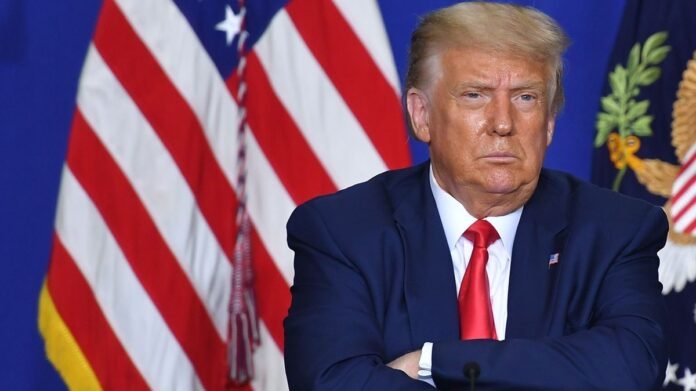

In the realm of reporting on Donald Trump, there is a common pitfall of routine occurrences overshadowing significant events. The media often falls prey to this trap when faced with the President’s frequent and flagrant misconduct. Recent days have highlighted this tendency, particularly in the United States, where Trump’s derogatory remarks towards a reporter, referring to her as “Piggy” and labeling another as “insubordinate,” went largely underreported. Such behavior, although not surprising given Trump’s track record, should not be dismissed as trivial. It is crucial to recognize and address the alarming nature of his actions, such as advocating for the execution of opposition politicians on his latest Truth Social posts.
In a surprising turn of events, Donald Trump yielded last night and signed a bill mandating the release of the Justice Department’s files concerning the notorious figure Jeffrey Epstein. Despite his previous efforts to dissuade Republican lawmakers from supporting the bill, Trump acquiesced in the face of potential backlash. Emphasizing the need to focus on past accomplishments, he shifted his stance, signaling support for the release of the Epstein files. Trump’s social media posts highlighted his role in facilitating the bill’s passage, albeit with reservations about its implications, dismissing it as a Democratic ploy that may backfire.
Amidst these developments, Attorney General Pam Bondi and FBI Director Kash Patel held a press conference to address concerns regarding the Epstein files. Bondi assured compliance with the bill’s provisions and emphasized transparency in handling the investigation materials. However, the vague responses raised more questions than answers, particularly regarding the handling of new information and potential investigations into individuals mentioned in the released files.
Under the new legislation, the Department of Justice is mandated to disclose unclassified documents related to the Epstein investigation within 30 days, ensuring transparency while safeguarding sensitive information. While Trump’s directives on Truth Social have spurred actions against his adversaries, such as James Comey and figures linked to Epstein, the legality and implications of these actions remain contentious. Moreover, Trump’s recent call for the removal of Jimmy Kimmel from airwaves underscores his ongoing efforts to stifle dissent and criticism.
In a separate development, Trump’s invitation to Zohran Mamdani, the Mayor-elect of New York, for a White House meeting has sparked interest and skepticism. Mamdani’s willingness to engage with the President highlights the complexities of political interactions in a polarized climate. As Trump continues to assert his authority through social media platforms, the implications of his actions reverberate across various sectors, raising concerns about the state of democracy and freedom of expression.
The unfolding events underscore the need for vigilance and critical examination of political narratives, especially in light of Trump’s unconventional and often inflammatory communication strategies. As the saga continues to evolve, the role of media in shaping public discourse and holding leaders to account becomes increasingly paramount.