
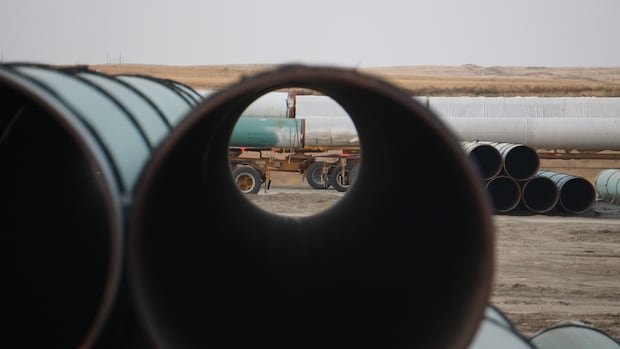

U.S. President Donald Trump has suggested that the Canada-U.S. Keystone XL oil pipeline project, which was previously abandoned by past administrations, might be revitalized under a new trade agreement between the two countries. However, industry experts, including a former executive linked to Keystone XL, raise the possibility that Trump’s statement could be driven more by political motives than by actual oil-related considerations.
In a recent social media post just before the implementation of new tariffs on Canadian imports, Trump announced a temporary halt on tariffs and a “deal” with Canada. Referring to his predecessor, Joe Biden, as “Sleepy Joe,” Trump mentioned the potential revival of the Keystone XL Pipeline, indicating a shift in stance regarding the project.
Dennis McConaghy, a former executive at TransCanada Corporation, now known as TC Energy, believes that Trump’s mention of Keystone XL could influence Prime Minister Mark Carney’s decision-making process amid ongoing trade negotiations. Since imposing tariffs on Canadian goods in 2025, Trump has consistently emphasized the self-sufficiency of the U.S. and downplayed the importance of Canadian exports, excluding certain vital commodities like oil from tariffs.
While the prospect of resurrecting the Keystone XL project may seem appealing to some, experts like Carlo Dade from the University of Calgary caution against premature excitement, highlighting the enduring political and environmental challenges that such a revival would encounter in the present landscape.
Valérie Beaudoin, a member of the Advisory Committee on Canada-U.S. Economic Relations, suggests that advancing the Keystone XL project could pose significant challenges for Trump, especially considering the potential for a Democrat-led administration in the future. Critics point out that Trump’s interest in reviving Keystone XL appears to be a response to previous administrations’ policies rather than a well-thought-out strategic move.
South Bow Corp., the operator of the Keystone Pipeline System, is exploring the Prairie Connector project in collaboration with Bridger Pipeline, utilizing parts of the previously abandoned Keystone XL pipeline. This project, if realized, could substantially boost Canada’s crude oil exports to the U.S., offering long-term benefits to the energy sector.
Despite the speculation surrounding the Keystone XL project’s revival, uncertainties remain regarding its feasibility and long-term implications. As discussions continue between the U.S. and Canada on trade and energy cooperation, the fate of Keystone XL hangs in the balance, with potential ramifications for both countries’ economies and energy landscapes.