
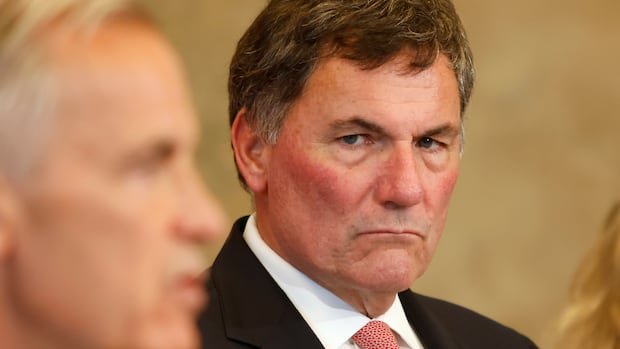

Canada’s Trade Minister, Dominic LeBlanc, expressed satisfaction with the United States retracting its stance on French language and culture following statements from U.S. Trade Representative Jamieson Greer indicating that Canada’s streaming regulations are not a crucial issue for the U.S. side.
LeBlanc stated that Canada appreciates the U.S. withdrawing its positions on discoverability and labeling, and assuring that steps to support French language and Canadian culture will not trigger future U.S. trade actions. He emphasized the anticipation of more positive clarifications from the U.S. that could pave the way for a mutually beneficial trade agreement respecting Canadian sovereignty.
Prime Minister Mark Carney instructed negotiators to cease discussions after the Trump administration raised concerns about culture, automotive industry, and sovereignty. Carney highlighted the U.S.’ objections to Canadian subsidies for French culture, the presence of French media online, and the bilingual labeling requirement for products in Canada.
In an interview with CBC News, U.S. Trade Representative Jamieson Greer indicated a softened stance on culture and language issues. Regarding French content visibility on streaming platforms, Greer acknowledged its importance and sensitivity, emphasizing that it was not a deal-breaker for the U.S. He emphasized the recognition of the significance of the French language in Canada and assured that they valued the cultural aspect.
Following the breakdown of negotiations, the U.S. imposed 50% tariffs on various Canadian goods, prompting Canada to announce counter-tariffs on over 700 U.S. imports. While the U.S.’ revised position on language and culture signals progress towards a potential deal, talks have reached an impasse, with uncertainties about resuming negotiations.
U.S. Commerce Secretary Howard Lutnick accused Carney of politicizing the situation by halting trade talks, claiming that discussions did not touch upon French or Quebec’s language laws. Lutnick dismissed the significance of Quebec’s language laws to the U.S., alleging that Carney’s actions were aimed at influencing the upcoming Quebec election.
PQ Leader Paul St-Pierre Plamondon expressed concerns over potential misrepresentation in the negotiations, emphasizing the importance of transparency. Coalition Avénir Québec Leader Christine Fréchette supported Carney’s narrative, highlighting the federal government’s communication on trade talks, particularly in the lead-up to the breakdown.
The conflicting perspectives between the U.S. and Canadian officials have hindered progress in negotiations, with uncertainties looming over the resumption of talks and the future of trade relations between the two nations.