
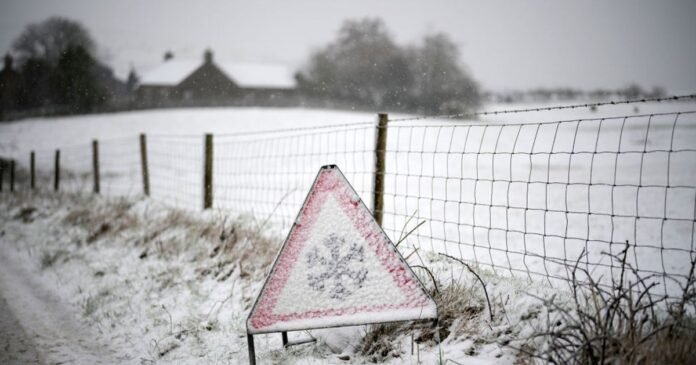

Britons are bracing for a bout of frigid weather as temperatures are expected to drop to -7C accompanied by heavy snow, courtesy of disturbances in the Polar Vortex.
Recent weather in the UK has been unsettled, with many regions experiencing rain. This trend is anticipated to persist through the week with relatively mild temperatures. However, the latter part of November and the upcoming weekend are likely to bring much colder weather as high pressure systems usher in icy Arctic winds.
The shift in weather patterns is a result of significant disruptions in the Polar Vortex caused by an unusually early Sudden Stratospheric Warming Event. The Polar Vortex, a mass of extremely cold air above the Earth’s poles, weakens, allowing frigid Arctic air to move southward due to sudden stratospheric warming, altering wind patterns. These alterations are known to trigger heavy snowfall, widespread blizzards, and a rapid drop in temperatures.
According to WXCharts maps, a wintry blast is expected this month, with temperatures nearing or dropping below zero early next week. By Wednesday, temperatures are forecasted to reach -7C in Scotland, -3C in northern England, and -2C in the southern regions.
The cold air mass is poised to intersect with moisture from the Atlantic, creating ideal conditions for snowfall across the UK.
The Met Office anticipates cooler conditions for the weekend, with frost in some areas and fewer showers, except for the south and southwest where patchy rain may persist before clearing.
Looking ahead to November 16-25, the national weather agency predicts continued cold weather. Central and northern parts of the UK are likely to experience colder and drier conditions with overnight frost, while the south may have cloudier and wetter weather initially.
Although there is uncertainty in the later part of the period, a shift towards more changeable conditions is possible, with potential rain or showers in some areas and the chance of hill snow in the north. Overall temperatures may return to near-average levels.