
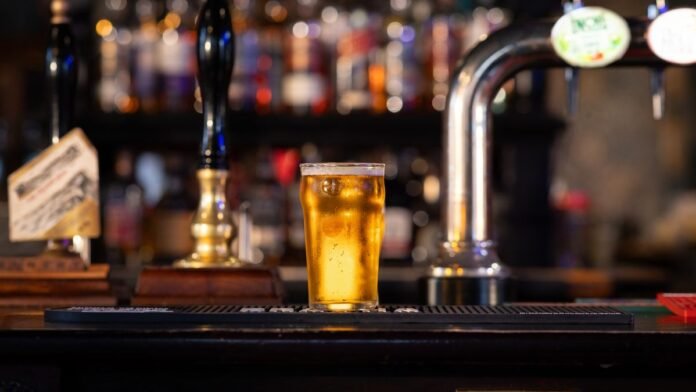

Chancellor Rachel Reeves has revealed the upcoming increase in alcohol prices across various establishments in the UK, including shops, bars, pubs, and restaurants, in her Budget statement today. Alcohol tax, an excise duty paid by producers and importers, is determined by the alcohol’s strength (ABV) and category.
During her Budget speech, Rachel Reeves announced that alcohol duty would be adjusted to match inflation, following the usual trend of aligning it with the Retail Price Index from September, which stood at 4.5% this year. The alcohol duty is scheduled to be uprated with the RPI on February 1, 2026, to sustain its current real-terms value.
Reeves emphasized that the decision to increase alcohol duty was reached after considering input from various stakeholders, who proposed options ranging from a duty reduction or freeze to above-inflation hikes. The aim was to strike a balance between recognizing the contributions of alcohol producers and the hospitality sector to the UK’s culture and economy while addressing the duty’s role in mitigating alcohol-related harm.
Despite industry leaders advocating for a duty freeze in this year’s Budget due to the impact of previous tax hikes and the additional glass tax burden, the decision to raise alcohol duty was made. Official figures indicate that alcohol prices have already surged by 5.8% compared to last year.
Last year, drinkers experienced a 3.6% increase in alcohol duty, resulting in a 54p rise for a bottle of wine and a 32p increase for gin, while draught duty was reduced by 1.7%, equivalent to a penny off a pint, in the 2024 Budget. Miles Beale, the chief executive of the Wine and Spirit Trade Association (WSTA), expressed concerns about the cumulative effect of these duty increases on businesses in the industry.
The UK Spirits Alliance spokesperson, Karl Mason, lamented the impact of the duty increase on distillers, pubs, and the wider hospitality sector. The continuous duty hikes were viewed as detrimental to businesses’ ability to invest, expand, and create employment opportunities, with a potential negative effect on consumers.
However, the Alcohol Health Alliance (AHA) commended the Chancellor’s decision to adjust alcohol duty in line with inflation as a step towards a more responsible approach to alcohol taxation. AHA emphasized the importance of maintaining alcohol duty in real terms to promote public health benefits and reduce alcohol-related harm.
Alcohol duty plays a significant role in the UK economy, with projections estimating that for the financial year 2025-26, it will generate approximately £13 billion in revenue. Comparisons with EU excise rates show that the UK ranks among the highest, particularly for beer and wine, with specific duties applied based on the type and strength of the alcoholic beverage.
In conclusion, the adjustment of alcohol duty in line with inflation will lead to increased prices for alcohol in pubs and shops.