
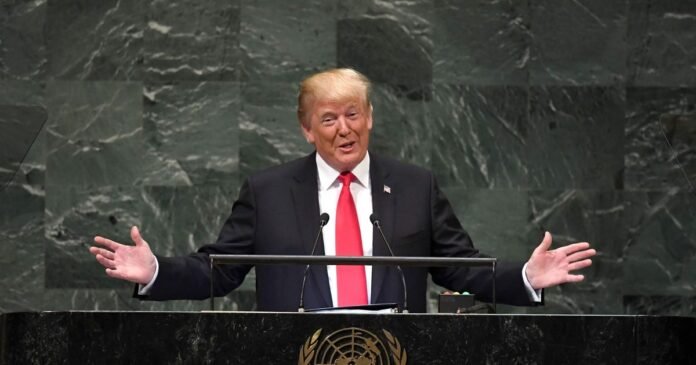

The United Nations, celebrating its 80th anniversary, is currently at the center of attention with discussions revolving around the conflict in Ukraine and the increasing number of nations recognizing Palestinian statehood. However, an additional significant issue looms over the General Assembly in New York this week.
Facing dire financial challenges, the UN is embarking on an initiative known as UN80 to reform its operations by streamlining its workforce and reducing its scope of work. This restructuring aims to enhance agility and eliminate redundant tasks within the organization.
In the upcoming year, the UN plans to reduce its budget by 20%, amounting to a $3.7 billion cut. This cost-cutting measure includes trimming 6,900 jobs, which constitute approximately 20% of its 35,000 employees.
While a leaner UN could potentially streamline operations by reducing duplicative programs and bureaucracy, experts like Richard Gowan from the International Crisis Group caution that the restructuring may result in the organization having to achieve more with fewer resources.
The financial strain on the UN is partly attributed to the United States, which accounts for a significant portion of the unpaid dues totaling $2.4 billion owed by member states. Of this amount, $1.5 billion is owed by the US.
The Trump administration’s review of US funding to the UN has already led to the suspension of financial support to various UN agencies, including those aiding Palestinian refugees, UN peacekeeping missions, UNICEF, and the UN Development Programme. Additionally, the US has withdrawn from the Human Rights Council and the World Health Organization, further impacting the financial stability of these international bodies.
With global stability at risk and under the presidency of Donald Trump, the UN finds itself in a precarious financial position, raising concerns about its ability to effectively address global challenges.