
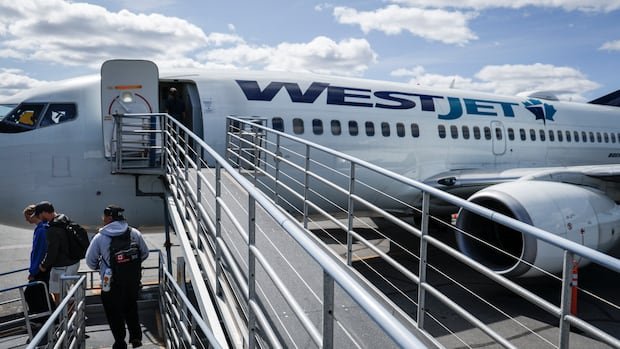

WestJet has agreed to pay $4.5 million to settle a sexual harassment class-action lawsuit that was initiated over ten years ago, involving more than 3,000 flight attendants, as confirmed by the lead plaintiff and her legal representative. The terms of the settlement were recently approved by a B.C. judge, following their finalization in June. WestJet expressed satisfaction with reaching a settlement in a statement issued regarding the matter.
The lawsuit was sparked by former flight attendant Mandalena Lewis’s allegation that she was sexually assaulted by a pilot during a layover in Hawaii back in 2010. Subsequently, in 2016, additional female employees of the airline came forward, leading to the case being certified as a class action by the B.C. Court of Appeal in 2022. The flight attendants contended that WestJet had failed to establish a safe working environment with sufficient anti-harassment measures in place.
Lewis conveyed to CBC News her relief at the conclusion of the case but expressed a sense of dissatisfaction with the outcome, feeling that the plaintiffs did not receive “full justice.” She articulated feeling disheartened by the nominal dollar amount and the fact that WestJet did not admit any wrongdoing as part of the agreement.
Following the settlement, the $4.5 million will be divided among 3,452 flight attendants after deducting expenses, including legal fees, equating to approximately $400 per flight attendant involved in the lawsuit. Additionally, Lewis mentioned that the judge decreased her previously agreed-upon honorarium from $20,000 to $10,000.
WestJet, in correspondence with CBC News via email, reiterated its commitment to fortifying its operations and training programs to prioritize the safety and well-being of all WestJet employees, emphasizing the promotion of an empowering organizational culture. As part of the settlement terms, WestJet will engage a third-party consultant to conduct a workplace assessment aimed at gauging the prevalence of harassment in the workplace, identifying underreporting trends, and enhancing reporting and response mechanisms.
Describing her legal journey as a “nightmare,” Lewis detailed in an affidavit the extensive physical and emotional toll of supporting over a hundred former flight attendants in sharing their sexual harassment experiences as the lead plaintiff. She emphasized that sexual assault and harassment of female flight attendants represent deeply ingrained, systemic issues within the airline industry that persist to this day.
Lewis reported the alleged 2010 assault to her managers and the RCMP, with subsequent charges being laid by the U.S. federal prosecutor in Maui, although the pilot could only have been arrested upon returning to the island. Another flight attendant later disclosed to Lewis that she too had been sexually assaulted by the same pilot in 2008.
In 2016, Lewis was terminated by the airline for insubordination following her prolonged request to review her employment record to ascertain WestJet’s actions regarding her complaint. The class-action suit alleged that between April 4, 2016, and Feb. 28, 2021, WestJet breached female flight attendants’ employment contracts by failing to establish and sustain an adequate anti-harassment program, including efficient reporting, investigating, and responding mechanisms for workplace harassment, contentions that WestJet refuted.
According to Joshua Coratti, an associate lawyer at the Toronto employment law firm Ball Professional Corporation, the settlement appears advantageous for WestJet as it absolves the company of individual liability claims, potentially averting higher costs. Coratti noted that class-action lawsuits often result in lower monetary compensations for individual plaintiffs, with legal practitioners typically benefiting from substantial legal fees. He highlighted the potential of such settlements to discourage companies from engaging in large-scale violations by setting precedence against unacceptable behaviors.