
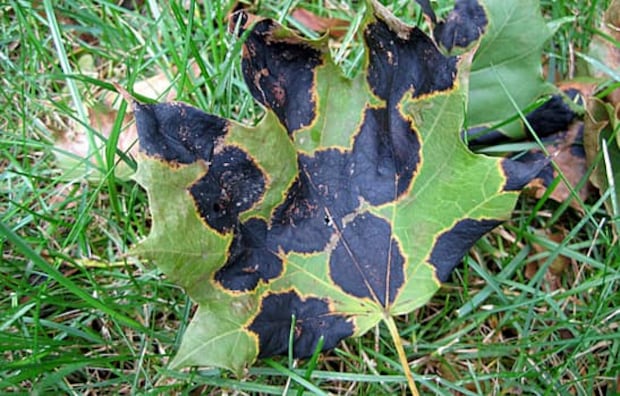

P.E.I.’s chilly and wet spring has led to the emergence of tar spots on some trees, prompting an increase in inquiries from residents, according to an expert.
Kurt Laird, a certified arborist at Laird Tree Care, stated, “People are reporting that their trees are shedding leaves already.” He added, “It resembles autumn in their yards.”
The tar spot fungus is impacting Norway maples, an invasive species in the region. This fungus creates black spots that disrupt the water supply to the tree, resulting in leaf drop.
“Rain helps disperse the spores by splashing them around the tree or property,” Laird explained.
“The fungal spores have small roots, and when the leaves are tender and pliable, these roots penetrate the soft new tissue, allowing the fungus to grow. However, significant damage isn’t visible until later, as it takes time for the fungus to develop.”
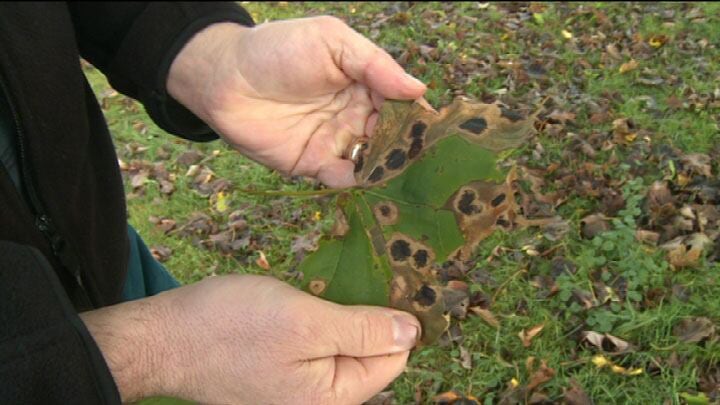
‘I anticipated a challenging year about two months ago, but most people are only now noticing it,’ said arborist Kurt Laird regarding the tar spot fungus. (CBC)
The provincial government stated that tar spots are “a prevalent fungal issue.”
“This condition is primarily observed on Norway maples, which are commonly planted in urban areas across Prince Edward Island,” the statement added.
“The disease does not threaten public safety, and treatment is usually unnecessary.”
Laird noted that previous springs in P.E.I. have been arid, indicating that the spots would generally appear later in the growing season.
“I suspected we were going to endure a tough year around two months ago, but many people are just witnessing it now.”
-
Want to enhance your property? This P.E.I. tree planting initiative can assist
-
Q&A
Black-spotted leaves are dropping from trees in Halifax. An expert offers insights
Laird explained that if the fungus resides in the center of the leaf, it would be fine, but it would have less surface area available for photosynthesis.
However, if it develops on the petiole—the stem connecting the tree and the leaf—the tree recognizes that water and nutrients cannot reach it due to the dead tissue, leading to the leaf’s drop.
“It’s a protective response,” Laird remarked. “There’s no point in retaining that leaf if it’s not benefiting the tree.”
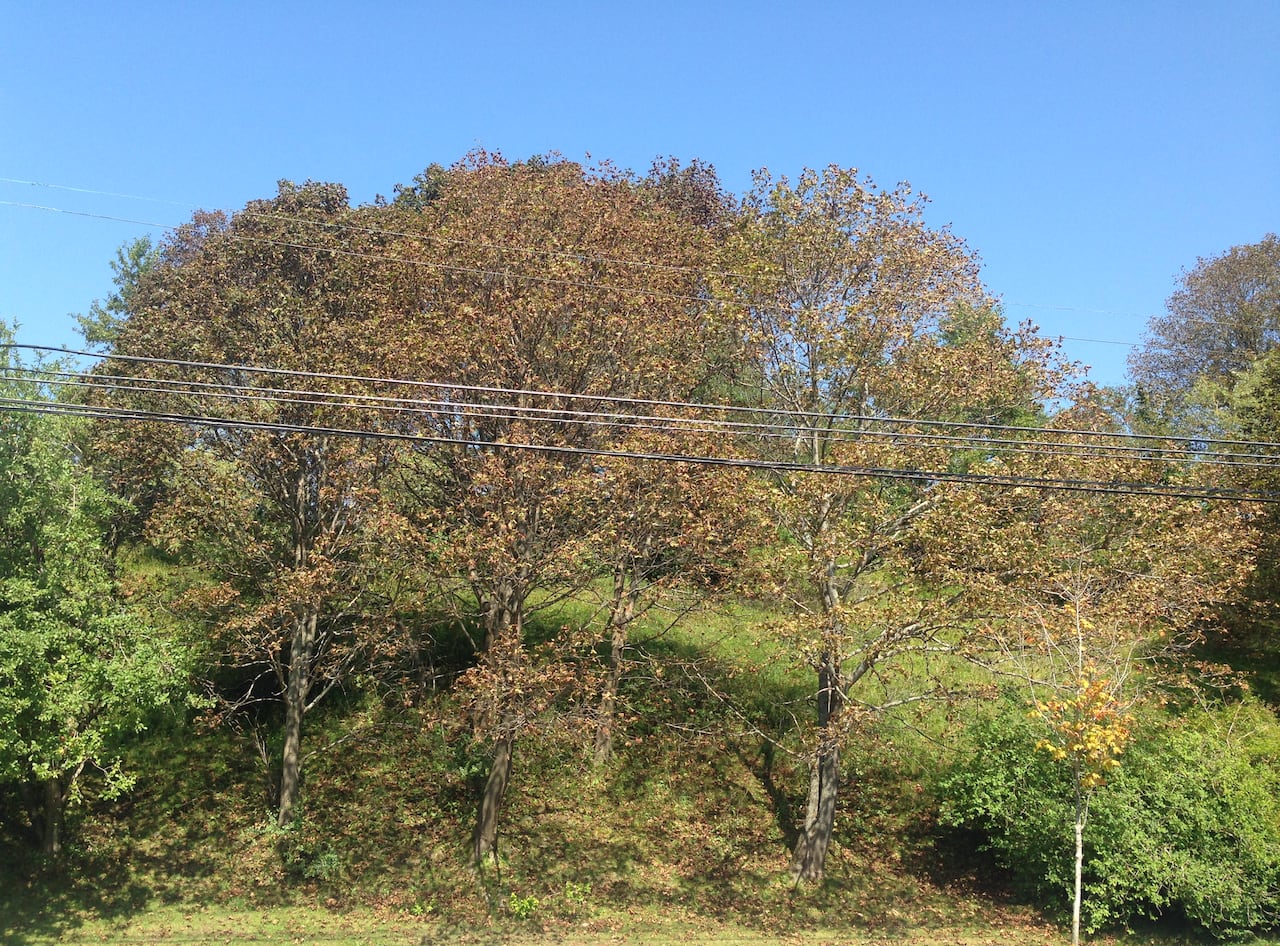
Treating Norway maples, such as these in Halifax, for tar spots can be challenging. (Moira Donovan/CBC)
Laird mentioned that managing the treatment can be complicated.
When a leaf spray or fungicide is applied, it forms a coating over the leaf. As the disease settles on the leaf, instead of establishing its roots, the fungus embeds itself in the treatment layer and perishes, subsequently being washed away.
However, due to the damp conditions prevalent during this time of year, it’s harder for a leaf spray to adhere.
“While fungicide spraying may be beneficial, it’s quite challenging, and there are few effective products available now because of pesticide regulations,” Laird noted.
“The most important action you can take is to maintain your tree’s health and gather any fallen leaves to dispose of them through Waste Watch.”