
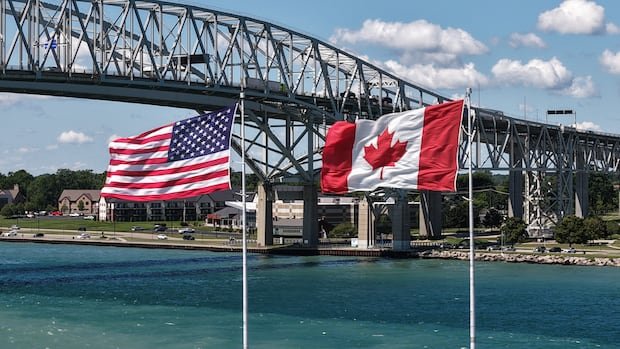

The latest move from the White House in the ongoing trade conflict between Canada and the U.S. involves a complete ban on the importation of Canadian dairy, motorcycles, and certain alcohol products. Additionally, new 50 percent tariffs have been imposed on a range of other goods. Economists have assessed the potential impact of these bans and tariffs on the Canadian economy, concluding that while the overall effect may not be significant, specific industries will feel the pinch, causing concern among business owners.
In response to Canada’s counter-tariffs, the White House introduced these bans and increased tariffs on various items, including mattresses and some paper products. Analysts estimate that the new tariffs will affect around $3 billion worth of Canadian goods, with approximately $2 billion worth of tariffs being removed. Despite Canada exporting over $527 billion in goods to the U.S. in 2025, the difference in tariffs is relatively marginal.
According to Derek Holt, a Scotiabank executive, the impact of the bans on alcohol, dairy, and motorcycles will be minimal as Canada’s exports in these categories to the U.S. are limited. Alcohol exports, the highest among these categories, totaled $550 million last year, with the bans affecting only $700 million worth of Canadian exports to the U.S. Analysts view these actions as more symbolic than substantive, providing some reassurance to investors.
The escalating tensions in the Middle East, leading to a surge in oil prices above $100 for the first time since July, pose a greater economic risk than the new U.S. tariffs, according to experts. Despite the tariffs affecting roughly $2 billion worth of goods on both sides, the overall impact is expected to be neutral.
While the tariffs may not significantly impact the economy in terms of numbers, the continuous escalation sends a clear message to business owners. The sudden imposition of bans without prior notice adds to the uncertainty, affecting business confidence on both sides of the border. Industries already facing 50 percent tariffs, such as alcohol producers, may not experience a substantial change with the bans. The real concern lies in the indirect effects of the escalating trade tensions on business sentiment and market uncertainties.