
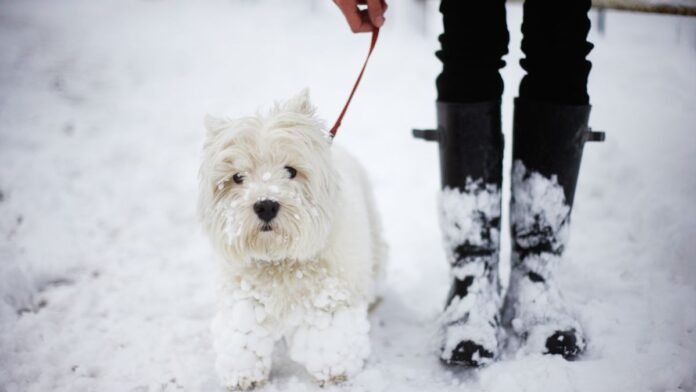

In the UK, a veterinarian has raised concerns about the potential dangers of winter weather conditions for dogs. Pet owners are advised to be cautious and aware of when it might be best to skip their furry friend’s usual daily walk.
Despite the recent lifting of snow and ice warnings by the Met Office, the UK is still facing harshly cold weather conditions. It is crucial for pet owners to consider the impact this weather can have on their pets’ health, as not all dogs are equally equipped to handle the cold. Factors such as size and breed play a significant role in determining a dog’s tolerance to low temperatures.
Dr. Dave Tweedle, Principal Clinical Director at Bath Vet Group, recommends that most dogs can safely go for walks when the temperature is above 15°C, which he considers ideal. However, with temperatures in the UK rarely reaching such levels during winter, pet owners need to be mindful of the cold thresholds for their furry companions.
According to Dr. Dave, temperatures between 7 and 4°C are generally acceptable for dog walks, but small dogs, puppies, or those with thin coats may benefit from wearing a coat. When temperatures drop below 0°C, extra care should be taken with small, elderly, and short-haired dogs to prevent potential health issues like hypothermia.
In extreme cold conditions, such as temperatures near -9°C, dogs, especially elderly or small breeds, are at risk of severe health consequences. Dr. Dave emphasizes that temperatures below -12°C are particularly dangerous, warranting limited outdoor exposure solely for essential bathroom breaks.
Signs of hypothermia in dogs can include shivering, weakness, pale gums, and slowed heart rate. If a pet shows these symptoms, it is crucial to administer first aid and seek veterinary assistance promptly to prevent further complications.
In cases of hypothermia, drying off a wet dog and providing warmth with blankets are essential steps. Gradually increasing the surrounding temperature, either indoors or in a car, is recommended, ensuring not to overheat the pet. Offering lukewarm water for hydration and avoiding rapid warming methods like hot water bottles are key considerations in aiding a dog’s recovery from hypothermia.