
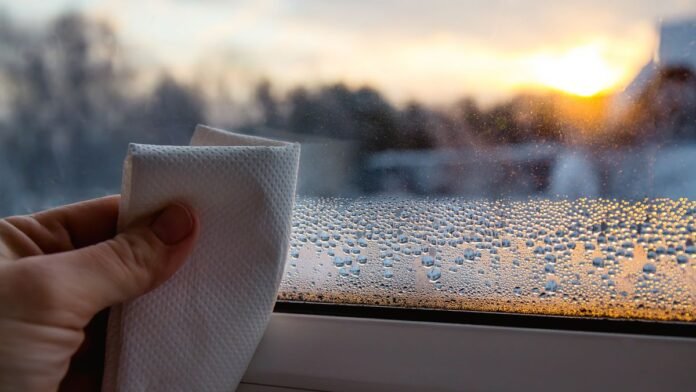

A specialist has highlighted a common error that many individuals are unknowingly making, which could be exacerbating issues with condensation, dampness, and mold. As winter approaches, managing the repercussions of the cold weather can be challenging and laborious.
Simon Roberts, a kitchen installation expert at Vogue Worktops, suggests a straightforward, cost-free practice to incorporate into your daily routine that can significantly decrease the presence of steam in the atmosphere, consequently reducing condensation, and helping prevent dampness and mold development. Condensation arises when warm, humid air meets a cold surface.
As the air cools down, it becomes saturated and releases surplus moisture, manifesting as water droplets. This phenomenon is more prevalent in winter when we switch on heating systems to combat the cold, causing warm indoor air to interact with cold walls, windows, and pipes.
Numerous daily activities contribute to increasing moisture levels in the air, such as cooking, showering, and even breathing. However, there are methods to mitigate this impact. Simon Roberts remarked that he encounters the aftermath of mold due to dampness regularly while dismantling old kitchens, and the most straightforward, cost-free solution is frequently mismanaged by most individuals.
Traditionally, people are advised to utilize extractor fans, open windows, and wipe down surfaces post-use to alleviate problems caused by excess moisture in the air. There is abundant advice on social media platforms, including a YouTube video offering a comprehensive tutorial on eliminating condensation and mold problems.
With 15 years of industry experience, Simon recommends an additional no-cost precautionary measure to prevent issues before they arise. The primary source of indoor moisture often originates from steam rising from sinks or pans during cooking or dishwashing.
This moisture adheres to the coldest surfaces in the kitchen, such as windows, external walls, and cabinet backs, creating ideal conditions for mold growth. According to National Energy Action, this type of condensation is a well-known cause of dampness.
Simon urges individuals to modify their routine by initially running cold water into the sink or pan before adding hot water, instead of starting with hot water directly. Following this sequence, hot water can be added to reach the desired temperature.
He emphasizes that this simple alteration in behavior can reduce the sudden burst of steam generated when hot water meets a cold surface by up to 90%. Numerous official guidelines advocate this approach, with various councils recommending starting with cold water when filling baths to reduce steam and subsequent condensation by 90%.
Simon elaborated, stating, “Instantaneously releasing steam by running hot water into a cold receptacle or sink causes a rapid thermal shock. Pre-filling with cold water helps mitigate this shock, ensuring that the hot water encounters a gentler, warmer base, leading to significantly less steam release. This adjustment can significantly lower moisture levels around your work surfaces, safeguarding your home from mold and dampness.”
Cold external walls and windows are already prone to condensation, and uncontrolled steam in kitchens can heighten the risk further.
<p class="CIPAConsentNotice_c