
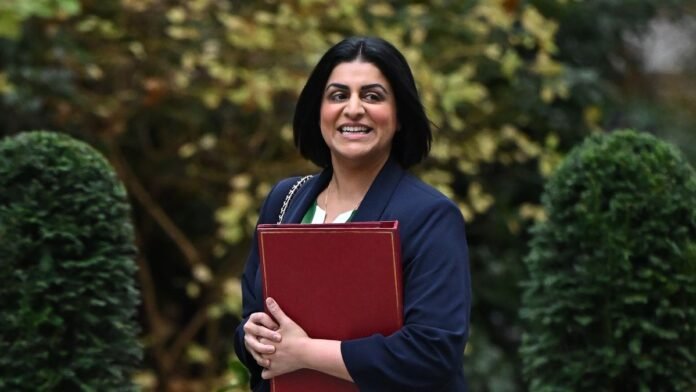

Shabana Mahmood is a figure who reveals their true nature when exposed to wealth and authority, reminiscent of many superficial individuals. When the Labour party loses power in the upcoming election, Shabana’s impact will be significant. Previously, as a backbencher representing Birmingham Ladywood, she participated in a pro-Palestine demonstration outside a Sainsbury’s store in Birmingham in 2014.
In her current role as Home Secretary, Shabana has aligned with the government on laws against protests and voted against stricter asylum regulations in her previous position as a backbencher. Notably, she defended Sir Keir Starmer against accusations of immigration issues leading to the UK becoming a “strange island.”
Critics have compared Shabana to Groucho Marx’s famous quote about principles. Her recent proposals reflect a shift towards immigration policies resembling those of right-wing figures such as Priti Patel and Suella Braverman. She aims to utilize asylum seekers’ personal assets, including jewelry, to cover the costs of hotel accommodations.
Furthermore, she advocates for replacing indefinite leave to remain with a temporary protection status that is renewable based on the safety of individuals’ home countries. Shabana also supports deporting asylum seekers once their home countries stabilize, while establishing limited legal pathways for genuine refugees.
These proposals have drawn criticism for perceived racism and anti-Muslim bias, a departure from her previous stance. Despite her immigrant parents’ struggles for a better life, Shabana’s current actions have disappointed many, including nine Labour MPs who view her policies as a betrayal of humanitarian values.
Shabana’s transformation has sparked backlash from constituents and independent candidates, leading to a significant reduction in her support. Despite this, she remains committed to her new direction, supported by government officials. The article highlights the closure of legal routes for asylum seekers in 2022 by the Tory government, emphasizing the importance of the 1951 Refugee Convention.
In conclusion, Shabana’s evolving stance on immigration and asylum issues has raised concerns among her constituents and fellow Labour members. By aligning with controversial policies, she risks alienating her support base and facing electoral consequences in the future.