
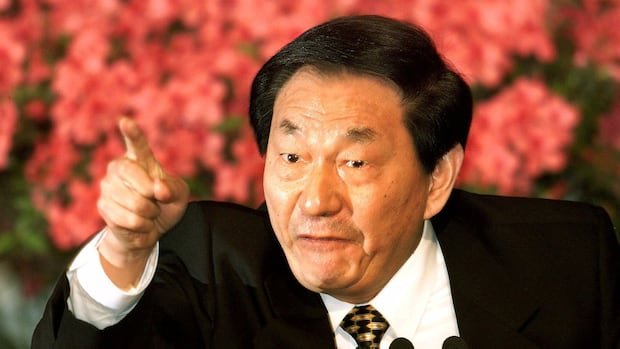

Former Chinese premier Zhu Rongji has passed away at the age of 97, as confirmed by state media reports. The official Xinhua news agency announced that Zhu succumbed to an illness in Beijing at approximately 11 a.m. on Wednesday. Known for his impatience and sharp-tongued demeanor, Zhu played a pivotal role in kickstarting China’s rapid economic growth by implementing significant reforms in the 1990s, including steering the country into the World Trade Organization.
Despite facing adversity and being exiled to rural areas for advocating reforms in other communist nations, Zhu spearheaded a series of transformative initiatives during his tenure as premier, from 1998 to 2003. His confrontations with Communist Party traditionalists and state-owned enterprise leaders led to the overhaul of inefficient state-owned companies, resulting in millions of job cuts but ultimately propelling China to surpass Japan as the world’s second-largest economy after the United States in 2010.
Building on the economic reforms initiated by former leader Deng Xiaoping in 1979, Zhu is widely acknowledged for his determination and resourcefulness in driving groundbreaking changes such as China’s accession to the WTO, a move that significantly boosted China’s status as a global exporting powerhouse. These reforms contributed to sustaining economic growth at over eight percent annually from 2000 to 2010, reaching a peak of 14.2 percent in 2007.
Assuming the position of premier at the age of 69 in 1998, Zhu gained popularity for his candid criticism of government inefficiencies and corruption, earning him nicknames like Boss and Madman Zhu. Notably, he once remarked, “I have prepared 100 coffins here — 99 for corrupt officials and one for myself,” in a statement published by the party newspaper People’s Daily.
Ranked third in the party hierarchy behind President Jiang Zemin and National People’s Congress Chairman Li Peng, Zhu established his reputation as a no-nonsense leader during the 1990s by effectively combating inflation through stringent price controls and restructuring loans to unprofitable state enterprises, despite facing resistance from local authorities.
Zhu’s relentless efforts to secure China’s WTO membership culminated in a landmark achievement following arduous negotiations that commenced in the 1980s. This milestone commitment to free trade enabled Zhu to dismantle protectionist practices by local officials and foster a more competitive business environment in China.
Furthermore, Zhu’s legacy includes initiating a real estate boom in 1998 by launching a program to sell state-owned company apartments to the public, leading to a significant shift towards private homeownership in urban areas. Although advocating for profit-oriented reforms in key sectors like banking and aviation, Zhu remained steadfast in retaining government ownership over strategic industries.
Born on October 23, 1928, in Hunan province, Zhu’s early career was marked by political setbacks, including a 22-year exile following his support for reforms in Eastern Europe. However, he made a remarkable comeback in 1979 and rapidly ascended the political ranks, eventually assuming key roles in Shanghai’s municipal government and later China’s central leadership.
Zhu’s willingness to take responsibility for government shortcomings, coupled with his self-deprecating humor and pragmatic leadership style, endeared him to the public and distinguished him as a rare political figure who prioritized accountability and transparency throughout his tenure. His contributions to China’s economic development and global integration leave a lasting legacy that continues to shape the country’s trajectory in the modern era.