
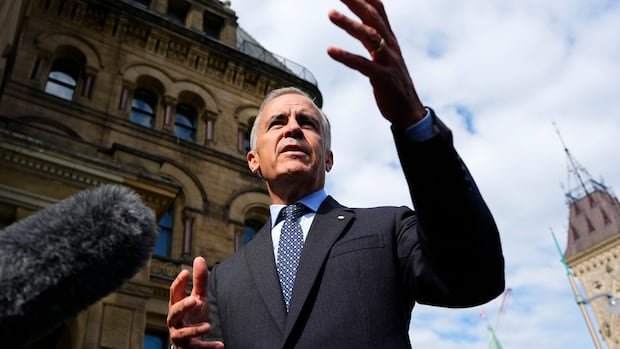

Just before Canada is about to impose counter-tariffs on $27.6 billion worth of U.S. goods, both sides have no intention of engaging in last-minute negotiations. The Prime Minister’s Office confirmed that there are no plans for Prime Minister Mark Carney and U.S. President Donald Trump to have any discussions on Monday. Additionally, there are no arrangements for Canadian trade negotiators to return to the negotiating table before the 12:01 a.m. ET Tuesday deadline when the counter-tariffs are set to affect more than 700 American products.
These tariffs, ranging from 15 to 50 percent, are a response to Trump’s recent imposition of 50 percent tariffs on Canadian goods after trade talks collapsed just before reaching a deal last month. The highest tariffs primarily target industries that have been severely impacted by U.S. tariffs, such as steel, dairy, and wood products.
Former U.S. Trade Representative Jamieson Greer, in an exclusive interview with CBC News, cautioned against further Canadian retaliation, hinting at potential bans on Canadian products from the U.S. Meanwhile, former Prime Minister Jean Chrétien expressed support for the counter-tariffs and suggested that Canada might need to explore additional measures in response.
Conservative Leader Pierre Poilievre urged the government to disclose the impact of retaliatory tariffs on families and businesses to the public. He emphasized the importance of transparency in decision-making and highlighted the need for clarity on the details of the failed Canada-U.S. trade deal.
The future of trade talks between the two nations, according to Greer, hinges on Canada’s actions. He placed blame on Canada for the breakdown of negotiations and suggested that it is up to Ottawa to restart talks. Carney, on the other hand, attributed the failed negotiations to new unfavorable terms proposed by the U.S., which would have limited Canada’s trade options with other countries.
Trump has continued to criticize Canada following the failed talks and preceding the escalation of tensions. He made remarks about potentially ceasing all trade with Canada and criticized Canada’s exchange rate with the U.S. in social media posts. Additionally, he targeted a Canadian aircraft manufacturer, urging them to build in the U.S. if they want access to the American market.
Despite the escalating trade tensions, Bombardier, the Canadian aircraft manufacturer, already has a U.S.-based factory and a significant presence in the U.S., with about half of its aircraft fleet serving American customers.