
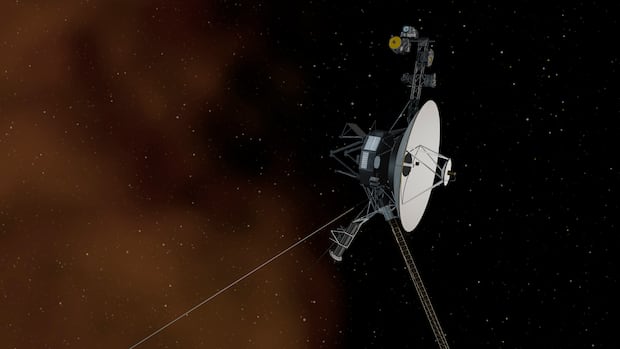

Reaching the position it occupies today took Voyager 1 almost five decades. However, light covers that distance in just one day.
The spacecraft has now achieved a remarkable milestone — precisely 16 billion miles.
“This signifies that it takes an entire day for light or radio signals from Earth to reach Voyager,” explained Jason Rhodes, the lead scientist for astrophysics, heliophysics, and fundamental physics at NASA’s Jet Propulsion Laboratory.
“Additionally, it takes another full day for signals sent back from Voyager to arrive on Earth.”
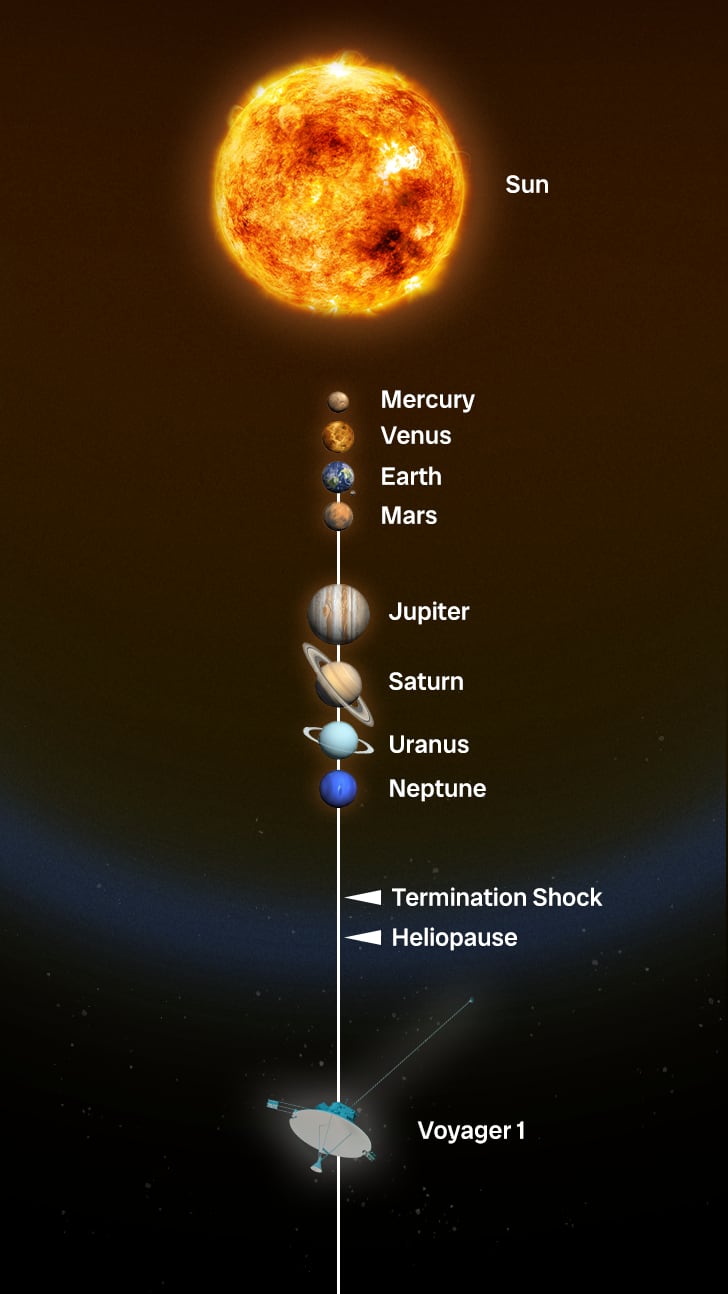
Though not to scale, Voyager 1 has traveled an impressive distance in nearly 50 years. (CBC)
Voyager 1 was launched in 1977, initially tasked with exploring the gas giants, Jupiter and Saturn. However, by 1998, it had surpassed those planets, becoming the furthest human-made object in existence. It entered interstellar space — the area just beyond the sun’s magnetic influence, known as the heliopause — in 2012, at a distance of 18 billion kilometers. Currently, it resides over 26 billion kilometers from Earth.
“When we discuss these vast distances, it truly highlights the enormity of space,” stated Bethany Downer, who is part of the communications team for the Hubble and James Webb space telescopes. “It’s remarkable that a relatively small construct we built is able to persist indefinitely.”
-
Are we alone? Institute searching for alien signals is using a new way to answer that age-old question
-
A spacewalk to remember: Canadian astronaut Joshua Kutryk says seeing Earth ‘changed’ him
Still operational, still communicating
The distinction of being “one light-day” away may seem arbitrary, as it doesn’t indicate any new physical boundary or alteration to Voyager 1 itself. Nonetheless, experts find it impressive that the spacecraft continues its mission while maintaining communication with Earth.

“Of course, it’s not functioning as extensively as it once did. Many of its instruments have been powered down,” Downer noted.
The power for Voyager 1 is produced through heat generated by the gradual decay of plutonium. As this power has diminished over the nearly fifty years, most scientific instruments have been turned off, with the latest being the LCEP, which was used to measure low-energy charged particles. There are still two functional instruments: one for detecting plasma waves and another for measuring magnetic fields.
“The data from these instruments provides significant insights into star formation and reveals that the space between stars is not void, but filled with fascinating particles and physics that we have only begun to understand thanks to Voyager,” Rhodes expressed to CBC News from Pasadena, California.
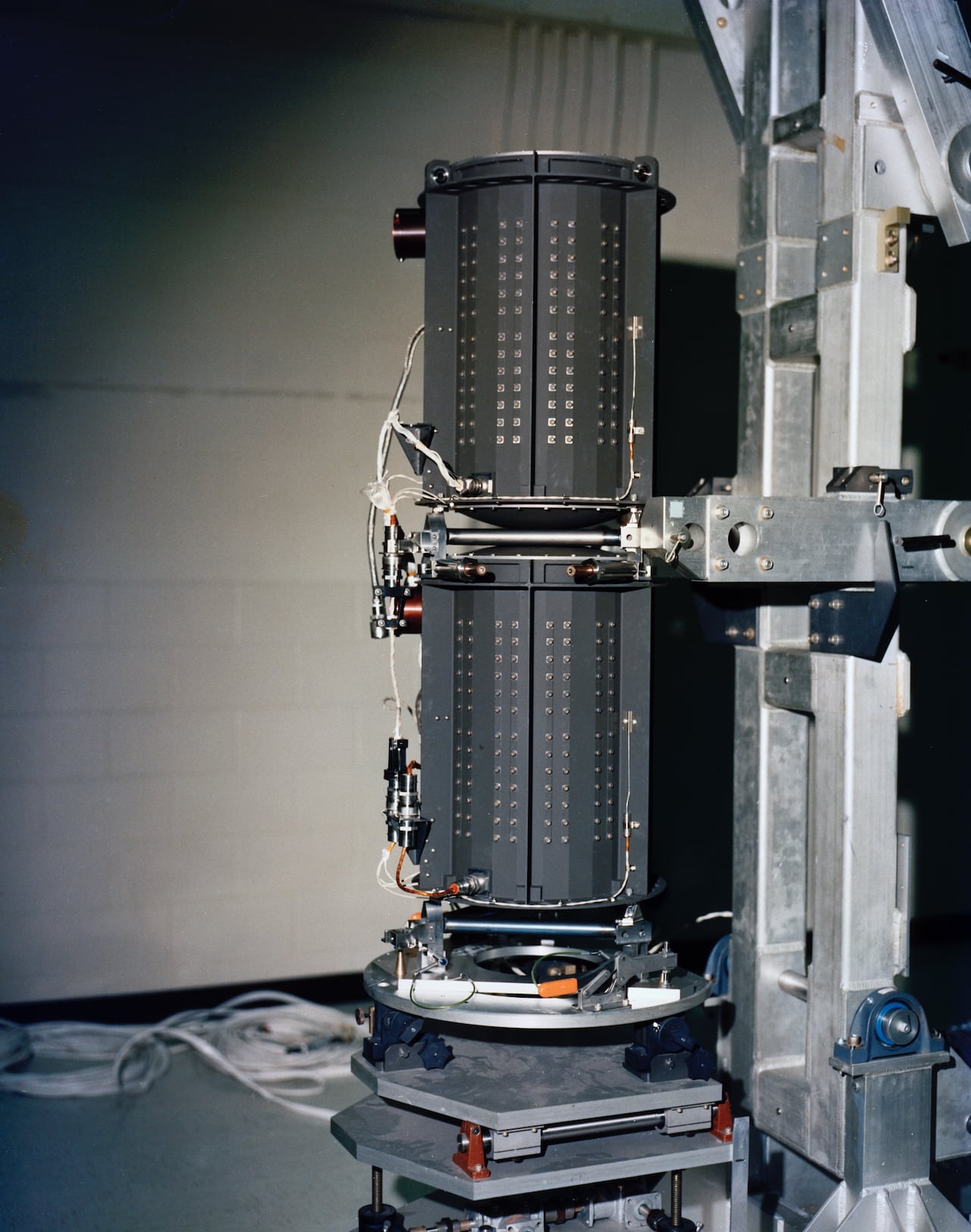
NASA’s Voyager spacecraft are equipped with three radioisotope thermoelectric generators (RTGs), which convert the heat from the decay of plutonium-238 into electricity. (NASA/JPL-Caltech)
These instruments send data back to Earth via the deep space network, which consists of antennas located worldwide, dedicated to maintaining uninterrupted communication with the spacecraft. While Voyager 1’s signals may be weak, there is a significant message that we are eager to receive.
“The most crucial message is: ‘I’m still operational, I’m still functioning,’” Downer relayed to CBC News from St. John’s.
In transit but not lost
NASA anticipates that Voyager 1 (along with its counterpart Voyager 2, which was launched the same year but on a different trajectory) will be able to transmit signals for another ten years. However, Rhodes indicates that there is no definitive endpoint, as teams are continuously exploring energy-efficient practices to prolong its operation.
Even after losing power, their missions will not conclude.
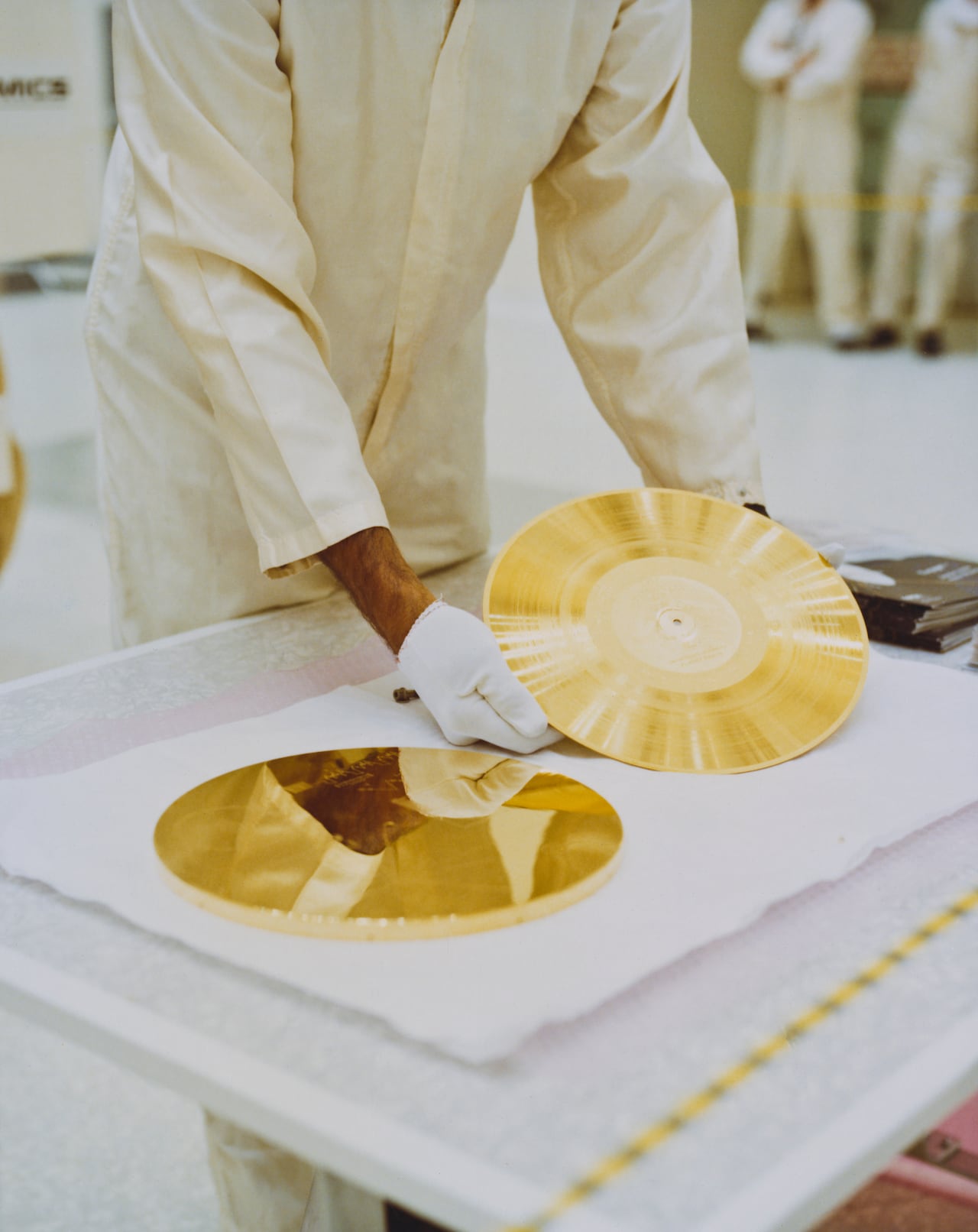
Both Voyager spacecraft carry a special payload, showcasing a glimpse of life and culture on Earth. (NASA/Hulton Archive/Getty Images)
“Each spacecraft includes a golden record,” explained Rhodes, “crafted from gold because it is a metal that won’t tarnish or decay.”
These golden records function as time capsules, encapsulating a variety of sounds from humanity, including greetings in 55 languages, music, and natural sounds such as thunder and the songs of humpback whales.
For those curious about how to play it, instructions are provided. As for who might listen, they would need to think similarly to us.
The records also feature a message in Morse code, according to Downer: “Ad astra per aspera,” translating to “To the stars, through hardships.”
As Voyager 1 continues its long journey, it has already offered profound insights into our solar system, particularly an understanding of our own existence, highlighted by this iconic image captured in 1990 from a distance of six billion kilometers.

The Pale Blue Dot is a photograph of Earth taken Feb. 14, 1990, by NASA’s Voyager 1 at a distance of 3.7 billion miles (6 billion kilometers) from the Sun. (NASA/JPL-Caltech)
Known as the Pale Blue Dot, this image portrays Earth as a minuscule speck illuminated by a beam of light. Captured at the request of American astronomer Carl Sagan, it emphasizes the profound significance of our seemingly insignificant existence, a theme he elaborates in his book of the same name.
“Reflect again on that dot. That is here. That is home. That is us.”