
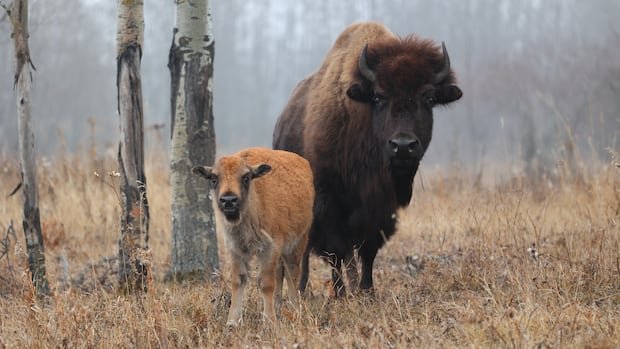

Once abundant across North America, bison faced near-extinction due to hunting, leading to significant changes in their genetic makeup. Recent DNA research has unveiled insights into the species’ evolution.
A study published in the journal Science delved into the genomes of 160 bison, tracing their genetic history back 20,000 years. Led by paleogeneticist Jonas Oppenheimer and the Paleogenomics Lab at the University of California, Santa Cruz, the research involved nearly 40 scientists, predominantly from Canada.
The aim of the research is to aid conservation efforts by understanding the complex genetic legacy of bison. The study revealed that modern bison herds, once highly connected, are now fragmented, posing challenges to their resilience.
Oppenheimer highlighted the significant genetic differences among bison herds today compared to their uniformity in the past. He emphasized the impact of a historic population bottleneck caused by human activities.
Genetic Mapping and Diversity
Scientists sequenced genomes from ancient bison remains and current herds to track changes in genetic diversity over time. The research included DNA samples from managed and wild herds in Canada and the United States.
The study’s genetic mapping involved 115 ancient bison genomes and 45 modern ones, creating the most extensive genetic database of bison to date. Chris Jass from the Royal Alberta Museum praised the collaboration and the study’s application in modern conservation practices.
By analyzing the genetic data, researchers could observe how population declines impacted bison genetics, preserving some diversity but leading to distinct genetic signatures in separate herds.
Species Differentiation and Conservation
The study highlighted the divergence between wood bison and plains bison, indicating distinct adaptations and genetic differences. Efforts to manage these subspecies separately are crucial for their preservation.
Greg Wilson, a bison geneticist, emphasized the importance of maintaining the distinctiveness of wood bison despite past intermixing. The study’s findings support the need for separate management strategies for the two bison types.
Wilson also mentioned the possibility of genetic matchmaking among isolated herds to prevent inbreeding and promote genetic diversity. Restoring gene flow across landscapes could help bison populations regain lost diversity and adaptability.
Enhancing Conservation Efforts
Collaborative efforts, such as the Bison Integrated Genomics project, aim to conserve bison populations through genetic preservation. By leveraging ancient genomes, researchers can facilitate the reintroduction of genetic diversity into isolated herds, fostering healthier and more resilient bison populations.
Tag: rewrite-pending