
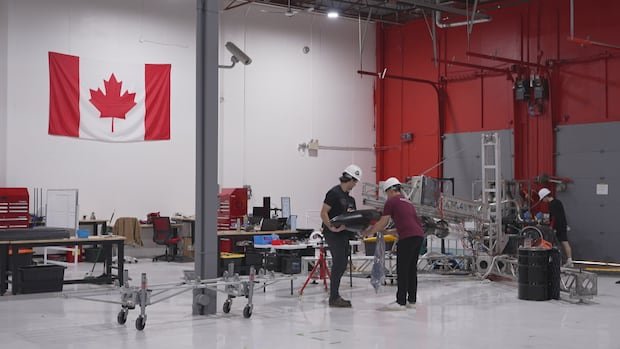

Canada, as the only G7 nation without its own launch capabilities, is striving to develop a Canadian-made rocket. Several Canadian companies are in a race to establish the country’s access to space promptly, especially as concerns arise about reduced launch opportunities from industry leader SpaceX. However, these rocket firms face challenges due to high costs, tight deadlines, and shifting government priorities.
Given Canada’s current inability to launch rockets independently, customers within the country, including private companies and government entities, rely on external providers to deploy their satellites into orbit. Notably, SpaceX has been the primary launcher for Canadian satellites, handling all 12 Canadian payloads launched in 2025.
The significance of these satellites cannot be overstated, as they serve critical functions in telecommunications, military applications like threat detection, and environmental monitoring such as wildfire tracking. Marc Boucher, founder of SpaceQ, emphasizes the importance of Canada establishing its launch capabilities to safeguard against potential refusals from foreign launch providers.
In response to the need for sovereignty in space activities, the Canadian government has identified space as a key sovereign capability in its Defense Industrial Strategy and introduced legislation to permit launches from Canadian soil. Recent funding initiatives have supported three Canadian companies with $8.3 million each to develop light-lift rocket capabilities by 2028.
One of these companies, NordSpace, encountered an unsuccessful suborbital rocket test in 2025 but remains determined to try again soon. Reaction Dynamics, another recipient of funding, is working on a unique engine design to achieve orbit by 2028. The newest player, Canada Rocket Company, aims to build a medium-lift rocket capable of carrying multiple satellites into low Earth orbit simultaneously.
Canada Rocket Company’s CEO, Hugh Kolias, is optimistic about the company’s progress, having secured private investments and government support. While funding has historically been a challenge for rocket development in Canada, the current influx of funds has raised hopes for success in the industry.
Simultaneously, industry giant SpaceX plans to phase out its Falcon 9 rocket in favor of the larger Starship vessel, causing concerns among satellite customers reliant on SpaceX’s services. This transition presents an opportunity for emerging rocket manufacturers like Canada Rocket Company to fill the gap left by SpaceX.
The road to launching Canadian-made rockets is long and challenging, requiring substantial investment, rigorous testing, and collaboration between public and private sectors. Despite the hurdles, the push for sovereign space capabilities in Canada signifies a significant step towards achieving independence in the country’s space endeavors.