
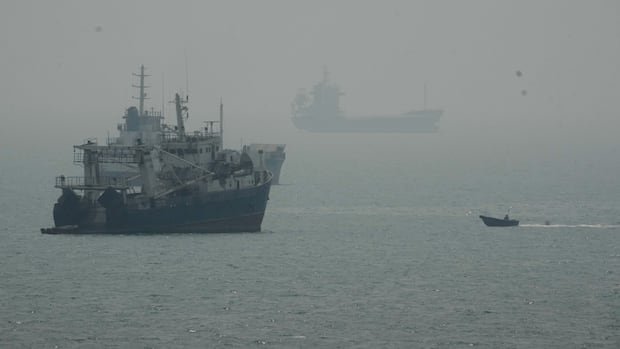

Iran announced on Wednesday that it carried out strikes on 10 ships near the Strait of Hormuz in retaliation after the U.S. destroyed five Iranian oil tankers. These actions mark the most significant exchange of attacks on maritime vessels between the two sides since the six-month-old conflict began.
The Islamic Revolutionary Guard Corps (IRGC) of Iran stated that they conducted a ballistic missile assault on a U.S. base near Al Azraq in eastern Jordan, targeted two U.S. ships, and fired on eight oil tankers trying to pass through a restricted area in the Strait of Hormuz.
The attacks in the strategic waterway led to a surge in oil prices, with the international Brent crude benchmark surpassing $100 per barrel for the first time since July. The ongoing hostilities have disrupted oil markets, with prices previously dropping to $70 amid expectations of a resolution between the U.S. and Iran to facilitate the safe passage of stranded tankers out of the Persian Gulf.
Tensions have further escalated due to intensified clashes between Saudi Arabia and the Iran-backed Houthis in Yemen. The recent Houthi attacks on Saudi cities resulted in massive fires at oil facilities, causing visible damage from space and leaving 73 people injured, as reported by Saudi authorities.
The impact of these events has been felt by American consumers at gas pumps, with gasoline prices averaging $4.15 per gallon and diesel prices reaching $5.90 per gallon, marking significant increases compared to a year ago.
The geopolitical uncertainties have led to concerns about a durable resolution before the upcoming U.S. midterm elections. Bank of America analysts expressed skepticism about the likelihood of a swift resolution, which could have implications beyond the elections.
In response to the escalating situation, Canada has also witnessed a surge in gas prices, prompting the government to extend a gas tax holiday until the end of January to alleviate the economic burden on consumers.
Iran has declared a broader restricted maritime zone around the Strait of Hormuz, extending from Chabahar in Iran into the Gulf of Oman and the Arabian Sea, with specific coordinates yet to be disclosed. Amid the ongoing conflict, a drone strike targeted a tanker carrying Iraqi fuel oil in Iraqi waters, causing a fire on board but no casualties among the crew.
The United Kingdom Maritime Trade Operations agency reported incidents of disabling fire on vessels in the northern Gulf and Gulf of Oman during military activities in the region. Iran’s threats against oil tankers in Kuwaiti and Bahraini ports have added to the tensions, impacting the flow of global oil and other essential resources through the Strait of Hormuz.
As the conflict continues, the U.S. military has maintained a blockade on Iranian ports, while Iran has vowed to defend its interests by imposing restrictions on maritime activities and deploying advanced missiles against U.S. ships in the region.