
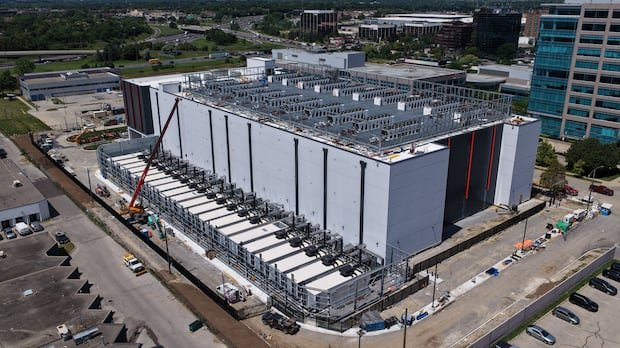

Ontario’s new data center framework, recently introduced by Premier Doug Ford in Guelph, is seen as a significant step in assisting municipalities in managing the presence of large-scale data centers within their communities. The framework, based on three core pillars – economic development, data protection and sovereignty, and community investment and public confidence – aims to provide consistency among communities as they formulate their policies regarding data center establishments.
According to technology analyst Carmi Levy, the guidelines outlined in the framework will bring uniformity to communities that are currently grappling with defining their positions on data center developments. He emphasized the importance of the provincial government’s proactive approach in setting guidelines to avoid a disparate array of community responses to data center projects.
The framework includes provisions for attracting data center investments that bring substantial benefits to host communities through financial and non-financial contributions, such as job creation, training opportunities, and infrastructure enhancements. Data centers are required to bear the full cost of their electricity consumption and any necessary upgrades without passing on these costs to residents.
Premier Ford highlighted that the framework ensures data centers cover their electricity expenses entirely, encouraging them to invest in their power generation. This will involve establishing a separate rate class for large new data centers, higher than existing industrial rates, to prevent electricity cost burdens on Ontario families.
In addition to financial considerations, the framework emphasizes leveraging Ontario’s strategic advantages like a cool climate and skilled workforce to attract data centers. It also promotes the adoption of environmentally friendly technologies by new data centers, including noise-reduction measures and closed-loop cooling systems to minimize environmental and community impacts.
The announcement of the framework comes at a time when municipalities across the province are deliberating on their approach to data center developments. For instance, Oakville has imposed a one-year moratorium on data centers, signaling a cautious approach to these projects. Other regions, including Essex County, Waterloo Region, and Toronto, are actively studying the implications of data centers on their communities.
Mayor Colin Grantham of Strathroy-Caradoc, a vocal opponent of data center construction in his community, acknowledged the importance of the framework in addressing concerns surrounding the industry. While recognizing the necessity of data centers, he stressed the need for stringent legislation to regulate their environmental impact, energy consumption, and location suitability.
Looking ahead, there are expectations for the introduction of comprehensive provincial and federal legislation focusing on data center regulations, particularly in light of Prime Minister Mark Carney’s AI strategy. It is crucial for Canada to monitor the evolving data center landscape closely to ensure alignment with the demands of the digital economy and sustainable development.