
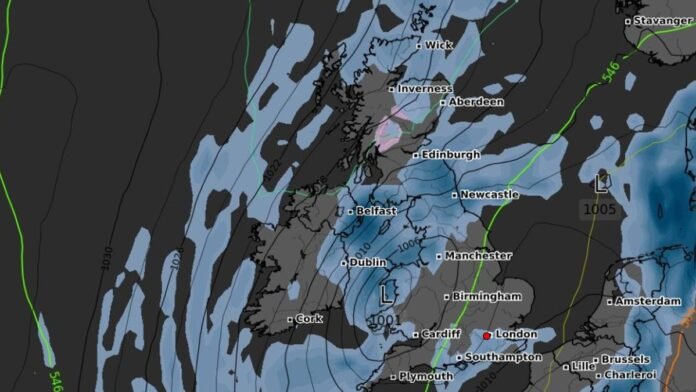

This weekend, a cold snap is expected to bring snow to parts of Britain, with temperatures dropping across the country. According to a new weather map by WXCharts, snowfall is predicted in five areas of Scotland on Sunday morning. The affected regions include Argyll and Bute, Sterling, Perth and Kinross, North Ayrshire, and Inverclyde.
Meanwhile, the north of England and Northern Ireland will experience rain, while the south is likely to have drier conditions. This snowy weather contrasts the recent return of summer-like conditions, where parts of southern England, such as London, saw temperatures reaching highs of 25C-26C on Friday.
Temperatures are expected to vary across the UK, with Edinburgh forecasted to reach a maximum of 19C, Manchester and Cardiff at 21C, and Belfast at 17C on the same day. However, the warm temperatures are anticipated to decrease towards the end of the weekend, dropping to the low-to-mid teens during the day and even single digits at night.
Although snow in Scotland in mid-September is not unheard of, it has become less common due to milder conditions in recent years. The average daytime temperatures for September in Scotland typically reach around 16C, compared to 19C in England.
The upcoming weekend will also bring plenty of rain, as stated by the Met Office’s overview for Friday to Sunday. The weather is expected to remain unsettled, with strong winds, rain showers, and a gradual decrease in temperatures across the UK.
Looking ahead, wet conditions are likely to persist into the following week, with a northwest-southeast split in weather patterns. The north and northwest regions may experience drier spells with possible fog and frost patches, while the south and east areas could see rain or showers near areas of low pressure. As the week progresses, temperatures are expected to decrease further, with a possibility of drier and settled conditions towards the end of the period.
The forecast suggests a gradual return to average temperatures, though a more changeable weather pattern may emerge later on.