
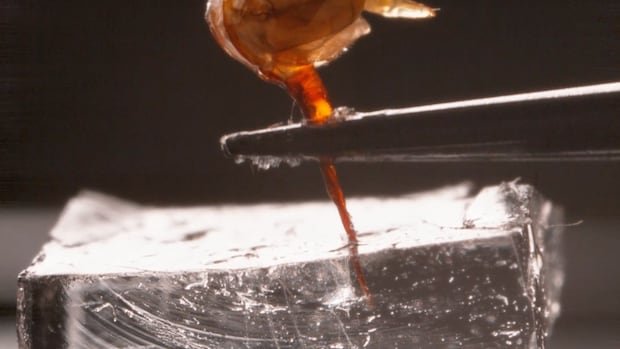

A western honey bee’s stinger is a final defense mechanism that injects venom upon contact, often resulting in the bee’s demise. New research published in the Proceedings of the National Academy of Sciences is shedding light on the effectiveness of this unique weapon.
Lead author Fiorella Ramirez Esquivel, a postdoctoral researcher at Macquarie University in Australia, emphasized the novelty of capturing the stinger in action through modern high-speed cameras. The study utilized high-speed cameras capable of capturing hundreds of frames per second to observe the swift bee stings. The translucent nature of the venom sac and stinger allowed for enhanced visualization under strong lighting.
Experiments involved live honey bees, where stingers were removed and bees were promptly euthanized due to the stinger’s limited activity time once detached from the bee’s body. Ramirez Esquivel described the precise and rapid process of inserting the stinger into an artificial skin substitute.
The study revealed a double-piston design within the stinger, with specialized valves facilitating simultaneous stinger penetration and venom injection. The intricate mechanism was likened to a complex engine with two pistons working in tandem, allowing for continuous venom flow and stinger propulsion.
Juliana Rangel, an apiculture professor at Texas A&M University, expressed fascination with the study’s detailed insights beyond conventional imaging techniques. The research highlighted the prolonged venom release and stinger movements post-sting, illustrating the intricate nature of bee defense mechanisms.
The study emphasized the unique evolution of the western honey bee’s stinging apparatus as an essential component of colony defense. The stinger’s barbed structure aids in embedding, releasing pheromones to signal other bees for collective defense efforts.
While acknowledging the potential limitations of the defense mechanism against tougher skin, researchers noted the strategic advantages of barbs and continuous penetration in repelling threats. The study’s findings could have implications for medical applications, given the continuous and efficient venom delivery system observed in the bee stinger.
The historical significance of honey bees, dating back thousands of years, was highlighted by ecologist Lauren Ponisio from the University of Oregon. The study’s use of high-speed videography unveiled new insights into bee stinger functionality, raising intriguing questions about the evolution and adaptations of honey-producing bees worldwide.