
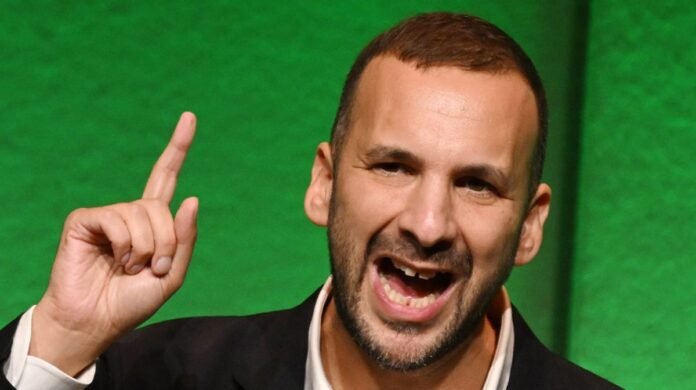

The Green Party’s new leader, Zack Polanski, presents a stark contrast to Nigel Farage in terms of their political ideologies. Polanski, a charismatic figure and self-proclaimed “eco-populist,” has openly criticized Farage, labeling him as a “fascist” and expressing determination to prevent Farage’s right-wing party from gaining power. Despite their ideological differences, both the Green Party and Reform UK have seen a surge in support, with pollsters attributing this growth to their adept use of social media to engage disillusioned voters.
Interestingly, a voter in a recent focus group organized by More in Common expressed admiration for both Zack Polanski and Nigel Farage, highlighting a trend where political affiliations are becoming less defined by traditional left-right divisions. Elections expert Luke Tryl noted that an anti-establishment sentiment is prevailing over conventional political boundaries, leading to the appeal of unconventional communication styles employed by figures like Polanski and Farage.
Recent polling data revealed that the Green Party surpassed major political parties for the first time, securing 17% support, trailing only behind Reform UK at 32%. This unexpected surge has created concern among established parties, particularly Labour, as they strive to regain trust from voters after years of Conservative governance. Analysts suggest that disenfranchised voters, disenchanted with the traditional political system, are gravitating towards alternative parties like the Greens and Reform UK.
The rise of non-traditional parties can be attributed not only to anti-establishment sentiments but also to their adeptness in leveraging social media platforms. Polanski, focusing on progressive issues such as climate change, has successfully appealed to a younger demographic, especially in urban areas like London, Bristol, Sheffield, and Manchester. This shift in political dynamics has prompted discussions on potential impacts on mainstream parties and the need for strategic positioning to address evolving voter preferences.
As the political landscape evolves, there is a growing emphasis on the need for progressive parties to balance their messaging to cater to diverse voter concerns. While some voters may consider tactical voting to prevent certain outcomes, parties must focus on articulating their vision for a fairer society with enhanced opportunities and robust public services. Striking this delicate balance between addressing pressing issues and appealing to varied voter sentiments poses a significant challenge for mainstream political entities.
In conclusion, the evolving political climate underscores the importance of adaptability and responsiveness from political parties to meet the changing needs and expectations of the electorate. The emergence of alternative parties like the Green Party and Reform UK signals a shift in voter preferences towards fresh perspectives and proactive engagement on pressing societal issues.